BBL vs IPL: What’s the Difference and Which Is Better for Your Skin?
If you’re looking for a treatment to improve pigmentation, sun damage, redness or uneven skin tone, you may have come across both BBL and IPL treatments. While the two technologies are closely related, there are some important differences between them.
BBL stands for BroadBand Light, while IPL stands for Intense Pulsed Light. Both use pulses of light rather than a traditional laser, but BBL is an advanced form of IPL technology designed to offer greater precision and customisation.
So, when comparing BBL vs IPL, what’s the difference and which treatment could be right for your skin?
What is IPL?
IPL (Intense Pulsed Light) is a light-based skin device that has been used for many years as a pigmentation treatment and it also helps with vascular concerns.
Unlike a traditional laser, which typically uses a specific wavelength of light, IPL delivers a spectrum of light wavelengths. Filters can then be used to target particular structures within the skin, such as melanin within pigmentation or haemoglobin within visible blood vessels.
IPL can therefore be used to as a treatment for sun damage, age spots, freckles, pigmentation, facial redness, visible blood vessels and uneven skin tone.
It is important to remember that IPL describes a category of technology rather than one specific device. This means the technology, capabilities and treatment experience can vary significantly depending on the IPL system being used.
What is BBL?
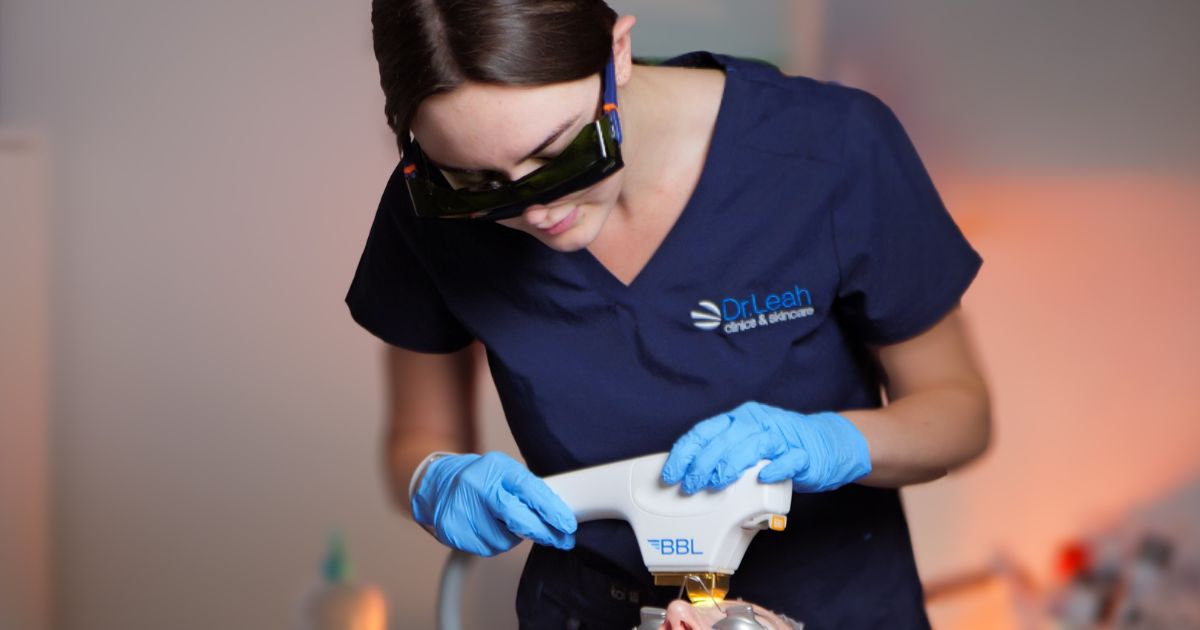
BBL (BroadBand Light) is Sciton’s advanced form of intense pulsed light technology.
Although you may frequently see the treatment referred to as “BBL laser” or “BBL laser resurfacing”, BBL isn’t technically a laser. Instead, it uses precisely controlled BroadBand Light to target specific concerns within the skin.
The technology can target both melanin and haemoglobin, making it particularly useful as a pigmentation and redness treatment. Different filters and treatment settings allow practitioners to customise the light delivered according to the individual patient and their skin concerns.
BBL vs IPL: What’s the Difference?
The easiest way to understand the difference between BBL and IPL is that BBL is an advanced form of intense pulsed light technology. Both treatments use broad-spectrum light rather than a single-wavelength laser, but their treatment capabilities can differ.
Traditional IPL has been widely used as a pigmentation, sun damage and redness treatment. However, because IPL covers many different devices, the technology, settings and treatment experience can vary considerably.
BBL is Sciton’s proprietary light-based technology. It gives practitioners a high degree of control over the wavelengths, filters and treatment settings used, allowing treatment to be tailored to the patient's skin and specific concerns.
Modern BBL systems also incorporate advanced cooling and rapid energy delivery, making it possible to treat both smaller targeted concerns and larger areas of skin efficiently.
So, while BBL and IPL work on similar principles, they aren't interchangeable treatments. BBL represents a specific advanced light-based platform, whereas IPL is a broader term covering a wide range of devices.
Is BBL Better Than IPL?
When comparing BBL vs IPL, it isn't simply a question of one treatment being stronger than the other.
The most appropriate technology depends on your individual skin, the concern being treated and the particular IPL system being compared.
BBL offers extensive customisation and can be used to target multiple visible signs of photodamage. It is great as a sun spots, redness, uneven skin tone and brown pigmentation treatment. This versatility makes it particularly appealing for patients looking to improve their overall complexion rather than focusing on just one concern.
However, the technology itself is only part of the equation. An appropriate skin assessment and carefully selected treatment settings are important for achieving the best possible outcome.
Both BBL and IPL can be used as a pigmentation treatment, as light energy can be absorbed by melanin within areas of excess pigment.
Following treatment, targeted areas of pigmentation may initially become darker before gradually fading as the skin recovers, helping the complexion appear clearer and more even.
However, not all pigmentation is the same. Sun-induced pigmentation, freckles, post-inflammatory pigmentation and conditions such as melasma can behave very differently.
This is why it is important to have pigmentation properly assessed before undergoing a light-based treatment. Your practitioner can identify the likely type of pigmentation and determine whether BBL, IPL or another treatment would be more appropriate.
BBL vs IPL for Redness
Pigmentation isn't the only concern that can be targeted with light-based technology.
Both BBL and IPL can also target haemoglobin within blood vessels, making them useful for certain forms of facial redness and visible vascular concerns.
With BBL, different filters and settings can be selected according to whether the practitioner is targeting brown pigment, redness or a combination of concerns.
This can be particularly beneficial for patients whose sun damage presents as a combination of redness, pigmentation and uneven skin tone rather than one isolated concern.
Is BBL the Same as Laser Resurfacing?
No. Despite “BBL laser resurfacing” being a commonly searched phrase, BBL is technically a light-based treatment rather than a resurfacing laser.
Traditional laser resurfacing uses laser energy to target the skin differently and is often used when concerns such as texture, fine lines or acne scarring are a priority.
BBL is more accurately described as a photorejuvenation treatment, particularly suited to concerns involving pigmentation, redness and visible sun damage.
Depending on your concerns, BBL may also form part of a wider treatment plan alongside laser resurfacing or other skin treatments.
What Can BBL Treat?
BBL's versatility means it can be used as a treatment to address several visible signs of skin ageing and photodamage.
Depending on individual suitability, treatment may help improve the appearance of sun damage, sun spots, freckles, pigmentation, redness, visible vessels and uneven skin tone.
It can also be used across areas that commonly show signs of cumulative sun exposure, rather than being limited to the face alone.
The appropriate treatment protocol will depend on your skin type, concerns and desired results, which will be assessed during your consultation.
How Much Downtime Is There After BBL?
BBL is generally considered a low-downtime skin treatment, although recovery varies according to the area treated, settings used and individual skin response.
Some patients experience temporary redness or warmth following treatment. When pigmentation has been targeted, darker areas can temporarily become more noticeable before gradually fading.
Your practitioner will advise you on appropriate aftercare and sun protection following your treatment.
BBL or IPL: Which Should I Choose?
If you're choosing between BBL and IPL, the name of the treatment shouldn't be the only deciding factor.
Your skin type, the condition being treated, the device being used and the experience of your practitioner can all influence which treatment is most appropriate.
A consultation allows your skin to be assessed properly and gives your practitioner the opportunity to recommend a treatment plan based on your individual concerns rather than taking a one-size-fits-all approach.
For those looking for an advanced approach to light-based skin rejuvenation, Dr Leah Clinics offers BBL HERO, the next generation of BroadBand Light technology.
Using advanced light technology and highly customisable treatment settings, BBL HERO at Dr Leah Clinics can be used for concerns including sun damage, redness and uneven skin tone. It is an amazing pigmentation treatment that helps to create a clearer, brighter and more even-looking complexion.
Treatments are tailored to your individual skin and concerns following a consultation with one of our experienced practitioners. Book now at Dr Leah Clinics.
Choosing between BBL and MOXI? Find out why both might be the answer.